
Meet Aistė Foktė
Fast, human and unpredictable: Aistė Foktė on finding her place in the trade
In the first edition of People Behind the Trade, Aistė Foktė, Business Development Manager at Skovs Korn Baltic, discusses her unexpected route into agricultural commodities, learning through experience, and why technology will never replace human connection.
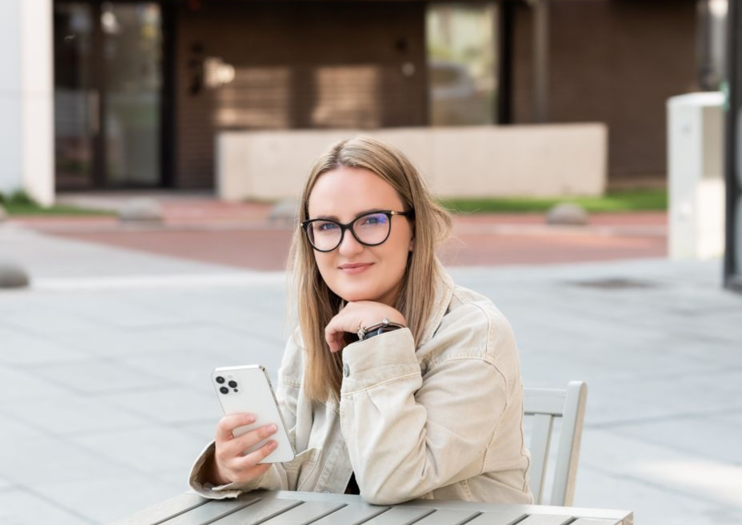
Agriculture has always been part of Aistė Foktė’s life. Her grandparents had a small farm where the whole family helped, while her father built a career in the industry, first as a consultant and trader and, for more than 15 years, as a broker.
Despite this background, Aistė initially had no intention of following a similar path.
“I always said that I had zero interest in doing the same thing,” she explains. “But everything changed while I was completing my master’s degree in Lisbon and writing my thesis on agricultural commodities and blockchain technology.”
Her research topic developed from a discussion with her academic adviser about industries that had not yet been extensively digitalised, followed by a family debate with her father about whether agricultural commodity trading could ever become fully digital. Blockchain offered a way to explore how trusted digital records might follow a commodity from farm to consumer.
Interviewing industry professionals also revealed how strongly the trade depends on trust. “At that stage it never stopped to amaze me how you could write contractual details on a napkin somewhere in the restaurant and expect your counterparty to keep its word,” she says. “Those conversations made me think that perhaps this was not such a bad place to be after all.”
Finding a role in the business
When Aistė decided to join Skovs Korn Baltic, the first question was where her skills could contribute most effectively.
Although she had no direct experience in trading, brokerage or execution, her studies and previous work had focused on identifying business challenges and developing strategies and processes to address them. Her family connections also gave her an unusual head start: after years spent hearing her father speak with colleagues, joining the industry meant, as she puts it, “putting faces to the voices”.
“That is how I found myself in business development,” she says. “Although a large part of my daily work now involves legal and execution-related tasks, we are also working on several solutions to develop and advance the brokerage business.”
Today, her principal focus is streamlining the brokerage process—from closing a deal through to preparing and executing the necessary contracts. The brokerage service does not end once a contract is concluded: a significant part of the team’s work is helping the parties fulfil their obligations and, when difficulties arise, finding a workable solution. Aistė also undertakes analytical projects and organises company events.
While Aistė enjoys analysing processes and developing strategies, it is the human side of the industry that she values most.
“I love the daily conversations with people. I am still relatively new to the industry, and it never ceases to amaze me how willing people are to help and teach me about different subjects.”
Learning to swim
Entering an international, relationship-driven industry comes with a considerable learning curve. For Aistė, one of the biggest adjustments was recognising how much knowledge must be developed independently and through practical experience.
In previous roles, Aistė had been accustomed to a defined learning period, with someone providing guidance before she took her first independent steps. “I had heard the expression that the industry is about seeing whether you can swim on your own,” she says. “I was still hopeful that there would always be a few people around to teach and guide me.”
The reality is that professionals across the trade are managing different markets, time zones and geopolitical developments—often while responding to circumstances that can change quickly. Every season brings a new chapter: forecasts may set expectations, but the market can change direction in a single day.
“You have to adapt, trust your knowledge and skills, and know where to find the right information,” she says. “When you make a mistake, you need to take the feedback, learn from it and move forward quickly, because something else is probably already happening.”
The trade can also be highly emotional. A difficult exchange may be followed minutes later by an ordinary conversation about the previous evening’s basketball. An ability to reset that can be as important as technical knowledge.
Technology, and the importance of human connection
Aistė’s interest in technology began before she entered the trade. Having undertaken some programming and studied how technology can deliver strategic change within businesses, she explored blockchain in agricultural commodity trading for her master’s thesis.
She sees significant scope for digitalisation to improve complex supply chains and address execution inefficiencies.
“Blockchain could play an important role in building trusted records and improving these processes,” Aistė says. “However, my research also showed clearly that there are things technology will never change—particularly the importance of human connection and communication.”
For an industry built on international transactions and long-term commercial relationships, technology may change how work is completed without replacing the trust that enables people to work together.
Building knowledge and confidence
The need to strengthen her understanding of the complete trade led Aistė to undertake Gafta’s Distance Learning Programme and progress to passing the Gafta Trade Diploma Exam in March 2026.
“My biggest motivation was simply to learn,” she says. “There are not many places where you can learn even the fundamentals of how this industry works.”
The online format enabled her to combine the programme with her professional responsibilities and study at a manageable pace. “The practical case studies were particularly useful,” she says. “You can learn the theory, but applying it to a case study or a real situation shows how well you have understood the material.”
The Gafta programme also created lasting professional connections. Aistė remains in touch with several course participants, who continue to exchange ideas and discuss challenges. She says the experience gave her greater confidence in resolving both daily issues and more complex tasks, while helping her support others in finding workable solutions.
Advice for the next generation
For young professionals seeking to establish themselves in the trade, Aistė’s principal advice is to invest in meaningful relationships.
“It is one of the fastest ways to learn, but it can also lead to new experiences, opportunities and career development,” she says.
That means being willing to participate in the broader industry community—even when it requires time and energy.
“Going to conferences, dinners and other events can be tiring, but those experiences help you learn, meet the right people and discover where you belong in the industry.”
Her advice reflects the lesson running through her career so far: knowledge matters, but progress also depends on curiosity, adaptability and a willingness to connect with others.
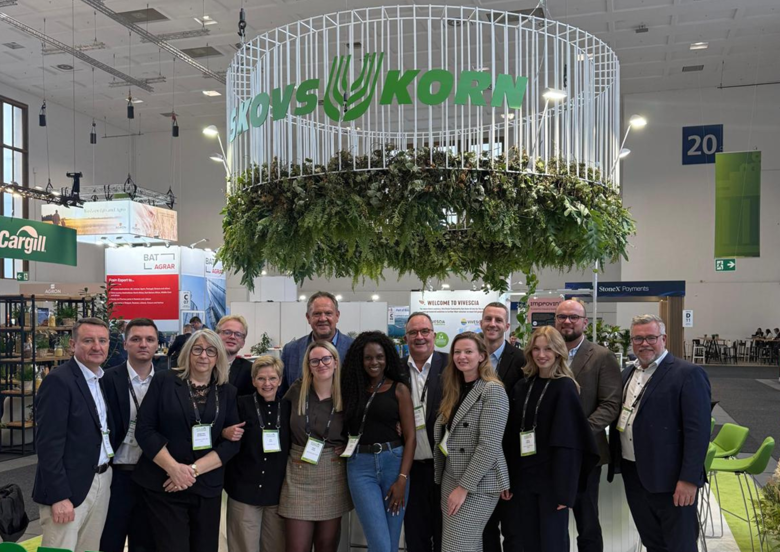
Describe the grain and feed trade in three words. Fast, human and unpredictable.
What is the best career advice you have received? Use every chance and opportunity you are given, even when it feels daunting.
What is one misconception about your work? That we work from nine to five.
Which skill would you like to develop next? Risk management.
Pass it on
At the end of each feature, our participant leaves a question for the next person in the series.
Aistė asks:
What do you think will change most in the agricultural commodities industry over the next five years?
Follow the next story
The next edition of People Behind the Trade will introduce another professional from across Gafta’s global community, sharing the experiences, lessons and advice that have shaped their career.
Subscribe to Your Grain Feed to receive the next feature, alongside the latest Gafta training, events and professional-development opportunities.
Views are the participant’s own. Responses have been edited for clarity and approved before publication.
Explore Gafta’s Distance Learning Programme
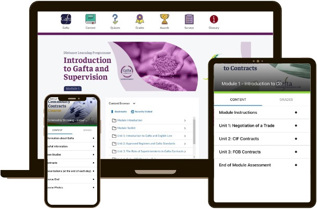
Each module includes live tutorials with a Gafta expert, interactive learning tools and robust assessments, including a final written essay. There is also an app available for students who wish to access content on the go. It can send push notifications to your phone when you receive a new grade or feedback from the tutor as well as any news updates pertaining to your training.