

London Rice Brokers’ Association (LRBA)
A historic body that shaped professionalism, standards, and arbitration in the international rice trade.
Founded: 1869
Location: London
Industry: International Rice Trade
Merged: Joined Gafta in 2026
Formation of the LRBA
In 1869, leading market participants established the London Rice Brokers’ Association (LRBA) to promote professionalism and ethical conduct within the sector.
The LRBA set out to ensure that members adhered to high standards, helping to build trust and consistency in international rice trading.

London as a Global Rice Trading HubDuring the 19th century, London became a major centre for the international rice trade, supported by a growing network of brokers and merchants. Rice brokers played a key role in providing market insight, expertise, and consistency across the industry. |
Key ContributionsThe creation of the LRBA marked a key development in the evolution of the global rice market. The association supported:
|
 |
Merger with Gafta
At the end of 2024, a strategic decision was made for the LRBA to merge with the Grain and Feed Trade Association (Gafta), an organisation with extensive expertise in managing international trade contracts and arbitration services.
Former LRBA members continue to uphold the association’s core values of reliability, professionalism, impartiality, and expertise within the international rice market. Now operating as Gafta members, they play an active role in supporting the development and application of modern Gafta rice contracts, ensuring the continued integrity and efficiency of global rice trading.
Historic Archive
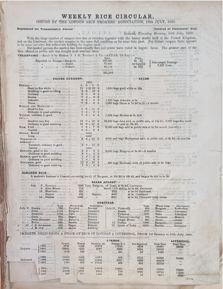
Explore key documents from the LRBA archive:
 |
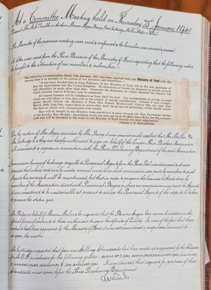 |
| Weekly Circular from 1869 | Committee Minutes from 1941 |
Access the Archive
Gafta holds a collection of historic documents from the London Rice Brokers’ Association (LRBA), which have been digitised and are available free of charge for research purposes.
The archive includes rice circulars from July 1869 through to March 2014 (with a small number missing), as well as minute books from 1930 onwards. Earlier records are believed to have been lost in a fire.