
Meet Jeremy Reynolds
Making the call: lessons from three decades in trade execution
In this edition of People Behind the Trade, Jeremy Reynolds, Managing Director of Crest Trade Services and a newly qualified Gafta arbitrator, reflects on more than 30 years in trade execution, what the profession has taught him about leadership and why human judgement will remain essential as technology advances.

Jeremy Reynolds entered the grain and feed trade almost by accident. He has stayed because execution sits at the point where contracts, logistics, risk and relationships have to work together, often under pressure and with imperfect information.
That perspective has shaped a career spanning Cargill roles in Moscow, Manila and Geneva, the creation of Crest Trade Services and, most recently, qualification as a Gafta arbitrator. Across each stage, one principle has remained constant: execution is not an administrative function but a commercial discipline that turns an agreed contract into a successful outcome.
Learning the trade through change
After graduating at the end of a recession, Jeremy was taking temporary manual jobs when he saw an advertisement for a role at Cargill. He knew little about the company, but was offered a position in a forwarding team responsible for executing a back-to-back rapeseed book. Accepting meant taking a pay cut; he now regards it as the best career decision he made.
“Execution is a puzzle. You are working within a set of constraints, trying to achieve a commercial objective, coordinating people and activities, and adapting when circumstances change. The satisfaction comes from making it work and helping to realise the margin in the trade.”
International assignments added another dimension. Working across different markets and cultures taught him that the same commercial objective may require a different route depending on the people, infrastructure and risks involved.
When Jeremy began in 1993, counterparty and country risk could be highly visible, barriers to trade were more pronounced and transactions often felt less standardised. Globalisation made many flows more established and increased confidence in cross-border business. Today, however, political disruption, trade barriers and supply uncertainty are again placing a premium on practical knowledge and adaptability.
Inside trading companies, execution has also become more structured and process-driven. Jeremy sees clear benefits in consistency, control and efficiency, but cautions against allowing process to obscure commercial purpose.
“Cost matters, but it has to be balanced against performance risk, timing, cash flow and the customer relationship. Errors in execution can be disproportionately expensive, particularly when teams are stretched or important capabilities are missing.”
Making specialist execution accessible
The idea for Crest Trade Services grew from Jeremy’s experience leading a large execution function at Cargill and helping to establish a global shared-services operation in India around 2011. The model showed how specialist talent, consistent processes and flexible capacity could improve execution while controlling cost.
He began to consider whether smaller and mid-sized trading businesses could access similar capabilities through an independent provider. The idea initially met a preference for keeping execution in-house, but the pandemic accelerated remote working, process standardisation and the technology needed for distributed teams. By 2023, the proposition had become more familiar and practical.
Crest now combines outsourced execution support with advisory work and training.
Returning to structured learning
Jeremy was already an arbitrator with the Sugar Association of London when he decided to complete Gafta’s Distance Learning Programme and Arbitrator Diploma. His career had covered both soft commodities and grains and feed, but he wanted a more systematic understanding of the contractual framework underpinning the latter.
“Experience is valuable, but structured learning puts that experience into a broader context. It also gives you the opportunity to learn from peers and from people who have encountered different situations.”
He would recommend the Gafta Distance Learning Programme even to professionals who do not intend to become arbitrators. Its grounding in contracts, shipping and execution performance can help participants understand not only what to do, but why particular obligations and procedures matter.
For Jeremy, returning to formal study was also a reminder that longevity in the trade does not remove the need to keep learning. ‘There is still plenty to learn after many years in the industry,’ he says. ‘That is part of what keeps the work interesting.’
Jeremy’s execution background helps him understand the practical circumstances surrounding a dispute: how a transaction was intended to work, the pressures facing each party and where performance began to break down. As an arbitrator, however, he must separate that operational perspective from the task of assessing the evidence impartially under the contract, the applicable rules and the law.
He believes the way a problem is handled at an early stage can influence whether it becomes a formal dispute. Lengthy email exchanges may harden positions and allow a relatively small disagreement to grow. A constructive conversation can establish the facts, clarify what each party needs and identify a practical route forward — supported by appropriate written records and compliance with the contract.
“Not every dispute can be avoided, but direct communication often gives the parties a better chance of resolving the issue before positions become entrenched.”
From telexes to artificial intelligence
Jeremy has seen execution move from telexes and faxes to email, enterprise systems and digital workflows. He views artificial intelligence as the next stage of that evolution rather than a replacement for the function itself.
AI can help teams manage large data flows, structure information, identify exceptions and support routine workflows. Used well, it could free people to focus on performance, risk and the conversations that require commercial judgement. Companies may deploy it to reduce cost, increase capacity, strengthen controls or improve the speed and quality of decision-making.
Yet commodity trading remains dependent on context and relationships. A theoretically optimal answer may not be workable once contractual history, competing priorities and the likely response of each party are considered. Outcomes frequently depend on a professional’s ability to interpret a situation, take responsibility and persuade others to act.
“Technology will continue to change the work. I expect less administration and more emphasis on interpretation and judgement, but relationships and accountability will remain central.”
A leadership lesson learned the hard way
In the previous edition of People Behind the Trade, Tomás Pita asked:
Looking back on your career, what is one lesson you learned the hard way that you wish someone had taught you earlier?
Jeremy returns to a major transformation he led in Geneva. The programme consolidated co-located execution teams and outsourced a number of execution and freight processes, changing roles, reporting lines and, for some colleagues, employment.
It was his first transformation at that scale. He had a clear vision but moved too quickly, without first creating enough understanding, trust and preparation. When resistance emerged, he stepped back, explained the reasons for the change more fully and created greater space for people to engage with it. Mentors helped him correct course.
“A good plan is not enough if people do not understand or trust it. You cannot expect everyone to move at the speed of the person who designed the change. Leadership is about creating the conditions for people to understand, challenge, contribute and commit.”

Jeremy Reynolds at the London Marathon
Quick fire
Describe the grain and feed trade in three words:
Dynamic. Global. Essential.
What is the best career advice you have received?
Always do the right thing, not the easy thing.
What is one misconception about trade execution?
That it is mainly administrative or control-focused. Good trade execution is a commercial discipline.
Which professional skill would you most like to develop next?
Sales. It is an essential skill for an owner-founder.
Pass it on
Each participant answers a question from the previous featured professional, then leaves one for the next person in the series.
Jeremy asks: What should the grain and feed trade prioritise to improve operational efficiency and commercial performance?
Follow the next story
People Behind the Trade is a Your Grain Feed series introducing the professionals whose experience, decisions and relationships keep the international grain and feed trade moving. Subscribe to Your Grain Feed to receive the next edition.
Explore Gafta’s Distance Learning Programme and other training opportunities for professionals across the trade.
Views are the participant’s own. Responses have been edited for clarity and approved before publication.
Explore Gafta’s Distance Learning Programme
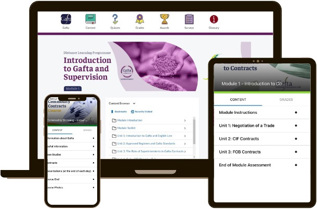
Each module includes live tutorials with a Gafta expert, interactive learning tools and robust assessments, including a final written essay. There is also an app available for students who wish to access content on the go. It can send push notifications to your phone when you receive a new grade or feedback from the tutor as well as any news updates pertaining to your training.