
Meet Tomás Pita
Beyond buying and selling: Tomás Pita on what makes a trade work
In the second edition of People Behind the Trade, Tomás Pita, Commercial Director at Acembex, explores the decisions behind a successful transaction, from balancing markets, logistics and competing priorities to understanding the contractual details that can shape its outcome.
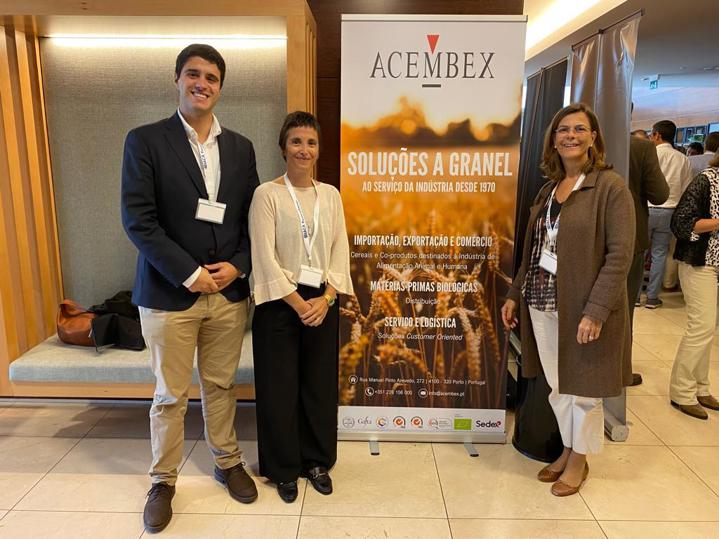
“A purchase or sale can quickly turn into a problem if the logistics behind it do not work properly.”
For Tomás, this is one of the defining realities of the grain and feed trade. As Commercial Director at Acembex, his responsibilities extend beyond monitoring prices and identifying commercial opportunities. Every decision must also account for customer requirements, contractual obligations, logistics, and the financial outcome of the operation.
While studying Animal Science Engineering, he became increasingly aware of Portugal’s dependence on imported cereals and feed ingredients, and the role international trade plays in keeping the country’s feed and food industries supplied.
His route into Acembex came through an internship while completing his master’s thesis. Initially focused on improving the company’s feed-formulation software, he soon became interested in the commercial activity around him.
“I was drawn to the combination of markets, logistics, risk and, perhaps most importantly, interacting with people,” he says.
Tomás has remained with Acembex since 2018, progressing to his current position as Commercial Director.
The interconnected nature of the trade
There is no typical working day for Tomás, and that variety is one of the aspects he values most.
Much of his role involves monitoring grain and feed markets, particularly Acembex’s principal origins, and understanding the factors driving changes in supply, demand and prices.
“The market can change quickly, so staying close to what is happening internationally is an important part of making good decisions,” he explains.
He also works closely with customers across the feed and food industries to understand their requirements and determine how the right products can be supplied at the right time.
Alongside this, Tomás monitors the profit-and-loss performance of operations and coordinates logistics. For anyone entering the trade, his experience offers an important lesson: markets, execution and customer requirements cannot be considered separately.
“On one side, we are close to farmers, crop production and the agricultural supply chain,” he says. “On the other, we are constantly considering trade flows, futures markets, currencies and geopolitical developments.”
Weather in one region, a change in regulation or an unexpected logistical problem can quickly alter the position.
“You have to react, adapt and make decisions using the information available at the time,” Tomás says.
Navigating competing priorities
Working with counterparties across different companies and markets requires Tomás to reconcile a wide range of priorities and constraints.
A supplier may be primarily concerned with loading and execution, while a customer is focused on price, quality and timing. Logistics providers and financial partners will have their own operational requirements.
“A large part of my role is bringing all these elements together and finding a solution that is workable for everyone,” Tomás explains.
The challenge becomes greater when market conditions change. Prices, freight rates and currencies can move quickly, a decision that appeared straightforward in the morning may look very different a few hours later.
Regulatory requirements add another layer of complexity, particularly when transactions involve multiple countries and frameworks. Food and feed safety, contaminants, sustainability and traceability all require increasing attention.
“You need to understand what each party needs, but also where their limits are,” he says. “Being transparent and keeping people informed makes it much easier to address problems when they arise.”
Connecting experience with structured learning
Tomás decided to undertake Gafta’s Distance Learning Programme after hearing positive feedback from colleagues at Acembex who had already completed it.
The opportunity was also encouraged by the company, which proposed the programme as part of his professional development.
The timing was important. By this stage, he had accumulated enough practical experience to understand the concepts being discussed, but wanted a more structured view of international commodity trading and its associated risks.
“I wanted to connect the practical side of my work with a stronger understanding of the contractual and technical aspects of the trade,” he explains.
One of the most valuable lessons was recognising the significance of contractual detail in international maritime trade.
“A clause or particular wording may look minor at first but can have significant consequences later,” Tomás says. “That changed how I approach contracts and made me much more attentive to the details.”
The programme also strengthened his understanding of quality, shipping, payment terms, contractual obligations and dispute resolution.
“I now have a clearer understanding of how these elements fit together within an international trade,” he says. “That has made me more confident when managing transactions and dealing with counterparties.”
More information, faster decisions
In the previous edition of People Behind the Trade, Aistė Foktė asked:
What do you think will change most in the agricultural commodities industry over the next five years?
For Tomás, the most significant development may not be one individual trend, but the volume of information companies must process and the speed at which they must respond.
He expects artificial intelligence and digital tools to become increasingly useful in analysing markets, trade flows, weather, logistics and other sources of information.
“I do not think they will replace the human side of trading,” he says. “However, they should make it easier to process information and allow people to spend more time on the decisions that matter.”
Sustainability and traceability are also likely to assume greater importance in international trade. The ability to provide reliable information about a product’s origin and journey through the supply chain will increasingly influence how companies operate.
At the same time, climate conditions, trade policies and geopolitical tensions may make commodity availability and trade flows less predictable.
“Rather than one trend changing the industry, I think the main challenge will be managing several changes at the same time,” Tomás says. “The ability to adapt will become increasingly important.”
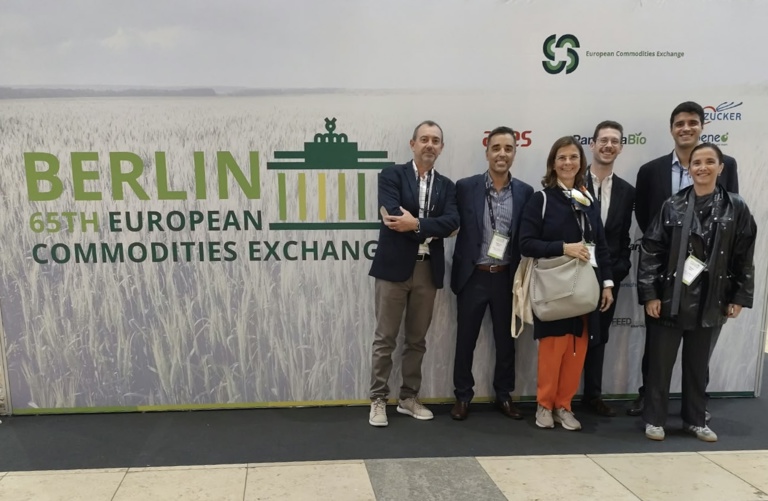
Describe the grain and feed trade in three words.
Source. Trade. Deliver.
What is the best career advice you have received?
“We have two ears and one mouth for a reason: listen more than you speak.”
What is one misconception people have about your work?
That it is simply buying and selling grain. In reality, it involves managing risk, logistics, market analysis, timing and relationships together.
Which professional skill would you most like to develop next?
Business strategy.
Pass it on
At the end of each feature, our participant leaves a question for the next person in the series.
Tomás asks:
Looking back on your career, what is one lesson you learned the hard way that you wish someone had taught you earlier?
Follow the next story
The next edition of People Behind the Trade will introduce another professional from across Gafta’s global community, sharing the experiences, lessons and relationships that have shaped their career.
Subscribe to Your Grain Feed to receive the next feature, together with the latest Gafta training, events and professional-development opportunities.
Views are the participant’s own. Responses have been edited for clarity and approved before publication.
Explore Gafta’s Distance Learning Programme
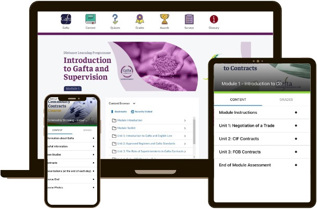
Each module includes live tutorials with a Gafta expert, interactive learning tools and robust assessments, including a final written essay. There is also an app available for students who wish to access content on the go. It can send push notifications to your phone when you receive a new grade or feedback from the tutor as well as any news updates pertaining to your training.